

Christine Jean-Pierre
CSMS Magazine
Science, Technology, Engineering, and Mathematics (STEM) drive innovation and shape the future of our world. From medical breakthroughs and environmental solutions to artificial intelligence and space exploration, STEM fields offer exciting opportunities to make a lasting impact. Yet for many years, girls and minority groups have faced significant barriers to entering and thriving in these professions.
Historically, women and underrepresented communities have been excluded from educational opportunities, professional networks, and leadership roles in science and technology. Stereotypes about who “belongs” in STEM have discouraged many talented students from pursuing careers in these fields. As a result, industries that rely on innovation have often missed out on diverse perspectives and creative problem-solving approaches.
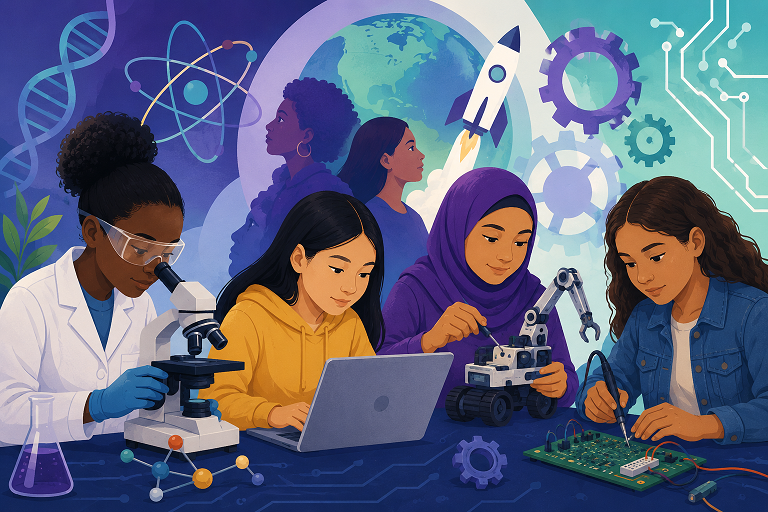
Fortunately, progress is being made. Schools, universities, nonprofit organizations, and technology companies are working together to create pathways that encourage greater participation from girls and minority students. Programs that provide mentorship, coding workshops, robotics clubs, scholarships, and STEM summer camps help young people build confidence and develop valuable skills. Exposure to role models who share similar backgrounds can also inspire students to envision themselves as scientists, engineers, researchers, and technology leaders.
Diversity in STEM is not only a matter of fairness—it is also essential for innovation. Research consistently shows that diverse teams bring different viewpoints, experiences, and ideas to the table. These varied perspectives often lead to more creative solutions and better outcomes. Whether designing new medical treatments, developing software, or addressing climate challenges, diverse voices help ensure that solutions serve a broader range of people and communities.
Parents, educators, and community leaders also play a critical role in breaking down barriers. Encouraging curiosity, supporting STEM learning from an early age, and challenging outdated stereotypes can help create an environment where all students feel welcome. Small actions, such as introducing children to science activities or highlighting the achievements of diverse STEM pioneers, can have a lasting impact.
The future of STEM depends on expanding opportunities for everyone. By removing obstacles and creating inclusive pathways, society can unlock the talents of countless individuals who may otherwise be overlooked. When girls and minorities are empowered to pursue careers in science and technology, communities benefit, industries grow stronger, and innovation flourishes. STEM for all is more than a goal—it is a necessary step toward building a more equitable and prosperous future for everyone.
Also: Teachers on the Frontline: Educators Tackling Burnout and Advocating for Change