

CSMS Magazine Staff Writers
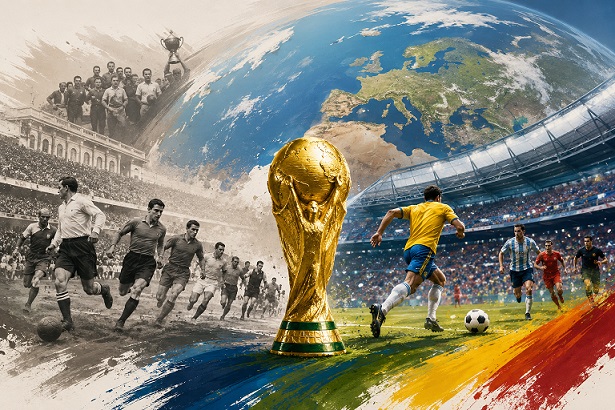
The FIFA World Cup has undergone a remarkable transformation since its inaugural tournament in 1930 in Uruguay. What began as a modest competition featuring just 13 teams has grown into the most prestigious and widely watched sporting event in the world. Over the decades, the tournament expanded in size and scope, reflecting the global growth of soccer. The number of participating teams increased from 16 in 1934 to 24 in 1982, then to 32 in 1998, and most recently to 48 teams for the 2026 tournament. Advances in transportation, broadcasting, and technology have also played a crucial role in the World Cup’s evolution, allowing fans from every corner of the globe to follow the action in real time. Television coverage transformed the competition into a global spectacle, while innovations such as goal-line technology and the Video Assistant Referee (VAR) have improved the accuracy of officiating.
Beyond its expansion and technological advancements, the World Cup has become a powerful symbol of international unity, cultural exchange, and national pride. The tournament has provided a stage for legendary players such as Pelé, Diego Maradona, and Lionel Messi to leave lasting legacies. It has also helped elevate emerging soccer nations, making the sport more inclusive and competitive than ever before. Host countries now invest heavily in infrastructure, tourism, and community development, recognizing the World Cup’s economic and social impact. As the tournament continues to evolve, it remains a celebration of excellence, passion, and global connection, uniting billions of people through their shared love of the beautiful game.
Also, see: When Football Revives Vertières: Haiti’s Youth Rekindle a Nation’s Hope