

Jacques Dessous
Special to CSMS Magazine
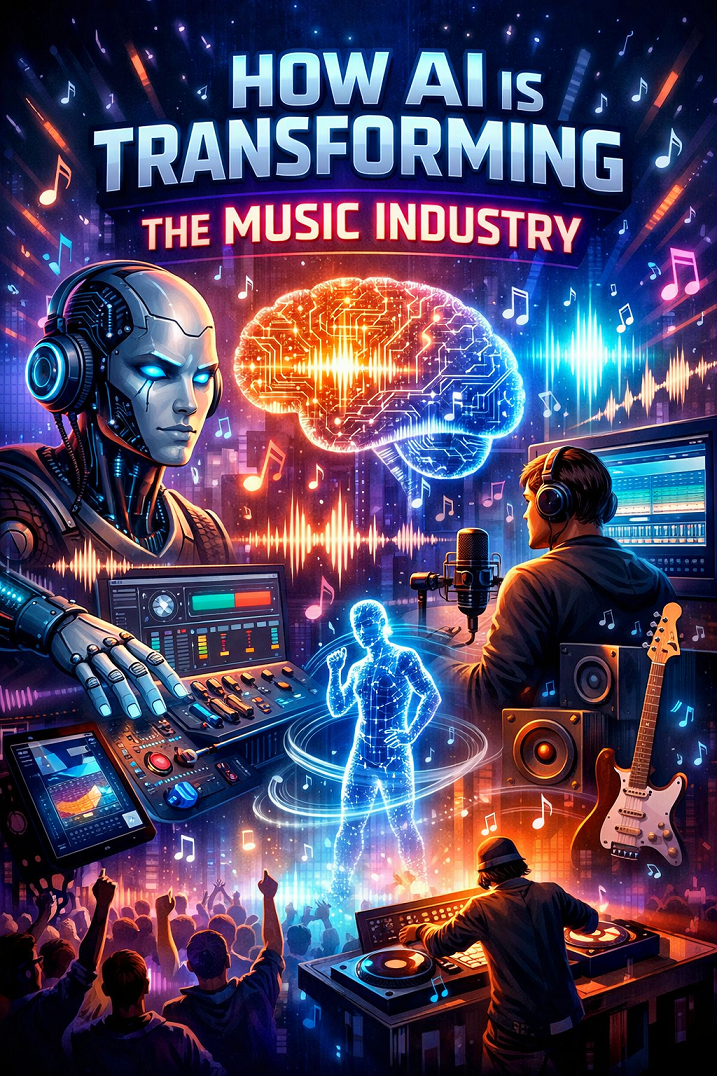
Artificial intelligence is rapidly reshaping the music industry, influencing how music is created, distributed, marketed, and experienced. Once viewed as a futuristic novelty, AI has become a practical tool that artists, producers, record labels, and streaming platforms now rely on to stay competitive in an evolving digital landscape.
In music creation, AI is expanding creative possibilities rather than replacing human artistry. Machine-learning tools can analyze thousands of songs to generate melodies, chord progressions, beats, and even lyrics in seconds. Producers use AI to assist with composition, sound design, and mixing, allowing them to experiment with styles and ideas more efficiently. Independent artists, in particular, benefit from AI-powered software that lowers production costs and removes barriers to entry, enabling high-quality output without access to expensive studios or large teams.
AI is also transforming music production and post-production. Automated mixing and mastering tools can balance audio levels, enhance sound quality, and prepare tracks for release in a fraction of the time it once took. While human engineers still play a vital role, AI accelerates workflows and helps musicians focus more on creative decision-making rather than technical hurdles.
Beyond creation, AI has revolutionized music distribution and discovery. Streaming platforms rely heavily on AI algorithms to analyze listener behavior, preferences, and moods. These systems power personalized playlists, recommendations, and curated experiences that connect listeners with new artists and genres. For musicians, this means greater exposure—but also increased competition—making data-driven strategies more important than ever.
Marketing and audience engagement have also been transformed by AI. Artists and labels use AI analytics to identify target audiences, optimize release schedules, and tailor promotional campaigns. Social media platforms leverage AI to determine which music trends gain traction, influencing viral success and shaping modern music culture. Virtual artists and AI-generated performers are even emerging, challenging traditional definitions of fame and performance.
However, the rise of AI raises ethical and legal questions. Concerns around copyright, authorship, and fair compensation are central to ongoing debates. As AI models are trained on existing music, artists worry about unauthorized use of their work and loss of creative control. Industry leaders and policymakers are now grappling with how to protect intellectual property while encouraging innovation.
Ultimately, AI is not replacing musicians—it is redefining their tools and opportunities. As technology continues to evolve, the music industry’s future will likely depend on finding balance: embracing AI’s efficiency and creative potential while preserving the human emotion, originality, and cultural significance that make music meaningful.
Note: Jacques Dessous lives and works in Jacksonville, Florida. He wrote this piece, especially for CSMS Magazine.
Also see: The Digital Divide of Giving: How Tech Solutions Fail the Lowest Income Families