

Aline Morrison
Special to CSMS Magazine
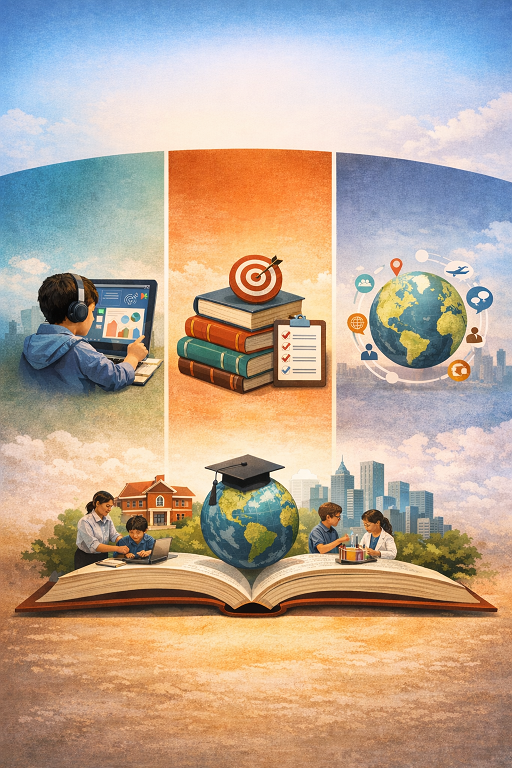
Public education stands at a pivotal moment as schools, educators, and policymakers navigate rapid social and economic change. At the forefront of this transformation is personalized learning, an approach that adapts instruction to each student’s strengths, needs, and interests. Advances in educational technology—from adaptive software to real-time data analytics—are empowering teachers to tailor learning pathways and pace, enabling students to progress with greater autonomy and confidence. Personalized learning promises to reduce achievement gaps by meeting learners where they are, though it also requires substantial investment in teacher training and digital infrastructure.
Closely related is the rise of competency-based education (CBE), which shifts the focus from seat time to mastery of skills and knowledge. In a competency-based system, students advance only after demonstrating proficiency, rather than based on age or grade level. This model aligns more directly with real-world expectations and can help prepare learners for a workforce that values problem-solving, communication, and adaptability. However, adopting CBE at scale presents logistical challenges for districts accustomed to traditional grade structures, including assessment redesign and equitable access to supports.
Public education is also increasingly shaped by globalization. The global economy demands that students not only master core academic subjects but also develop cultural competence, digital literacy, and collaborative skills. Schools are expanding curricula to include global perspectives, languages, and interdisciplinary projects that reflect diverse worldviews. At the same time, educators must contend with inequities in funding, resources, and access to advanced coursework that can hinder students’ ability to compete internationally.
As public education evolves, it must balance innovation with equity—ensuring that all students benefit from emerging practices. By embracing personalized learning, competency-based models, and a global orientation, schools can better prepare learners for the challenges and opportunities of the 21st-century workforce.
Also see: Teachers on the Frontline: Educators Tackling Burnout and Advocating for Change