

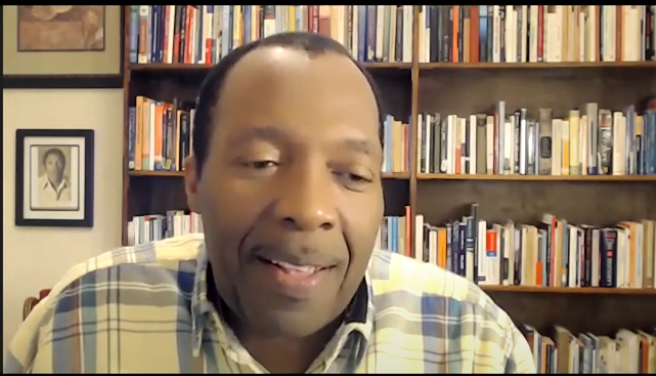
Claudine Hush
Special to CSMS Magazine Staff
From the dawn of civilization, literature has served as one of humanity’s most profound mirrors—reflecting the beauty, the pain, and the complexity of human existence. It is more than the act of writing; it is an intimate dance between emotion and intellect, between the heart’s yearning and the mind’s reflection. The works of Ardain Isma embody this timeless art form, standing as luminous examples of how literature can not only describe human interactions but also stir the deepest corners of our conscience and compel us toward justice, equality, and human dignity.
Ardain Isma’s novels—such as Midnight at Noon, Bittersweet Memories of Last Spring, and The Cry of a Lone Bird—transcend storytelling. They reveal the intricate web of human relationships: love and betrayal, hope and despair, courage and fear. In his writing, Isma presents characters not as distant figures, but as living embodiments of collective struggles. Through their triumphs and sorrows, readers are invited to reflect on their own humanity. His prose, rich with cultural texture and moral insight, bridges the gap between the personal and the universal—reminding us that no matter where we come from, our emotions and yearnings for justice are deeply intertwined.
What distinguishes literature as an art form from others—music, painting, or film—is its capacity for introspection. It does not simply entertain; it transforms. A novel can illuminate the unseen, giving voice to those silenced by history. When Ardain Isma writes about oppression, exile, or resilience, he is not merely documenting social reality—he is urging readers to feel it. His words become both mirror and catalyst, reflecting the human condition while igniting the will to change it. In this sense, literature becomes a quiet revolution, one that begins in the reader’s heart.
Moreover, literature’s strength lies in its ability to humanize the abstract. Political struggles, economic inequalities, and cultural tensions can often be reduced to statistics or headlines. But when they are woven into the lives of characters—when they acquire names, faces, and voices—they become impossible to ignore. Isma’s commitment to portraying the marginalized and oppressed transforms literature into an instrument of moral awakening. Through the lens of his storytelling, social justice ceases to be a distant ideal and becomes a shared responsibility.
To awaken social consciousness through literature is to remind humanity of its collective duty to uphold dignity. The written word, at its most powerful, transcends borders and ideologies. It compels readers to see the other not as stranger, but as kin. Ardain Isma’s literary vision reflects this truth with remarkable clarity. His art calls us to listen—to the cries of the poor, the laughter of the resilient, and the quiet determination of those who refuse to surrender their humanity.
In an age when distraction often dulls empathy, literature remains a sacred space of remembrance and resistance. It is through words that we rediscover our shared soul, and through writers like Ardain Isma that we are reminded of literature’s greatest purpose: to awaken, to heal, and to transform.
Note: Claudine Hush is a literary critique who lives in suburban Jacksonville, Florida.
Also, you can order Ardain’s latest novel here: The Cry of a Lone Bird and some of his latest works, including Midnight at Noon, Bittersweet Memories of Last Spring, Last Spring was Bittersweet .