

Jeff Kalyll
Special to CSMS Magazine
The recent cycles of violence and tentative ceasefires in Gaza present a painful duality: a fleeting glimpse of hope overshadowed by the grim architecture of a protracted conflict. The question of whether current diplomatic efforts represent a genuine chance for peace or merely a tactical pause is at the heart of the Palestinian people’s agony.
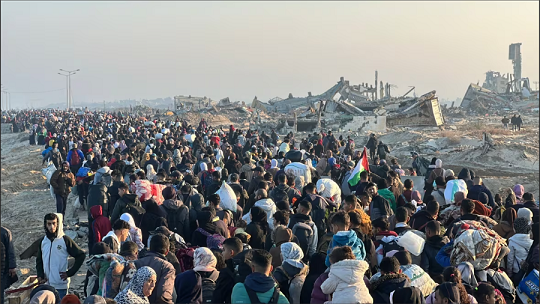
A temporary ceasefire, often brokered to facilitate the exchange of hostages and prisoners and to allow humanitarian aid, feels like a gasp of air for a drowning population. For a few days or weeks, the bombs stop falling. Families can venture out to find food and water, and the wounded can receive treatment. This respite is desperately needed and profoundly felt. However, this “pause” is often just that—a break in the hostilities, not an end to them. The underlying causes of the conflict—the blockade, the political impasse, the deep-seated traumas on both sides, and the fundamental questions of sovereignty and security—remain entirely unaddressed. When the last hostage is exchanged, the mechanisms of war frequently re-engage, and the suffering resumes, often with renewed intensity.
The path to a sustainable peace is fraught with immense obstacles. It requires a level of political will that has been absent for generations. It demands confronting hard truths: for Israelis, addressing the ongoing occupation and the humanitarian crisis in Gaza; for Palestinians, the challenge of political unity and renouncing armed struggle; and for the international community, moving beyond statements to applying consistent, meaningful pressure for a two-state solution.
Yet, within this bleak landscape, small openings exist. Each ceasefire, no matter how fragile, creates a precedent for dialogue. The sheer scale of the human toll in recent conflicts has amplified international calls for a lasting political solution. The utter exhaustion of people on both sides with the endless cycle of violence is a powerful, if often ignored, force for change.
Ultimately, the current chances for peace are perilously slim. A temporary pause to release hostages is the most likely outcome, a Band-Aid on a deep, festering wound. For the suffering of the Palestinians to truly end, the conversation must shift from managing the conflict to resolving it. This requires a courageous, comprehensive, and internationally-backed process that addresses root causes with justice and security at its core. Without that, any pause is merely the calm before the next storm.
Note: Jeff Kalyll is a freelance writer who lives in suburban Jacksonville.
Also see: France in Crisis: Can Macron Weather the Political Storm?