

Ardain Isma
CSMS Magazine
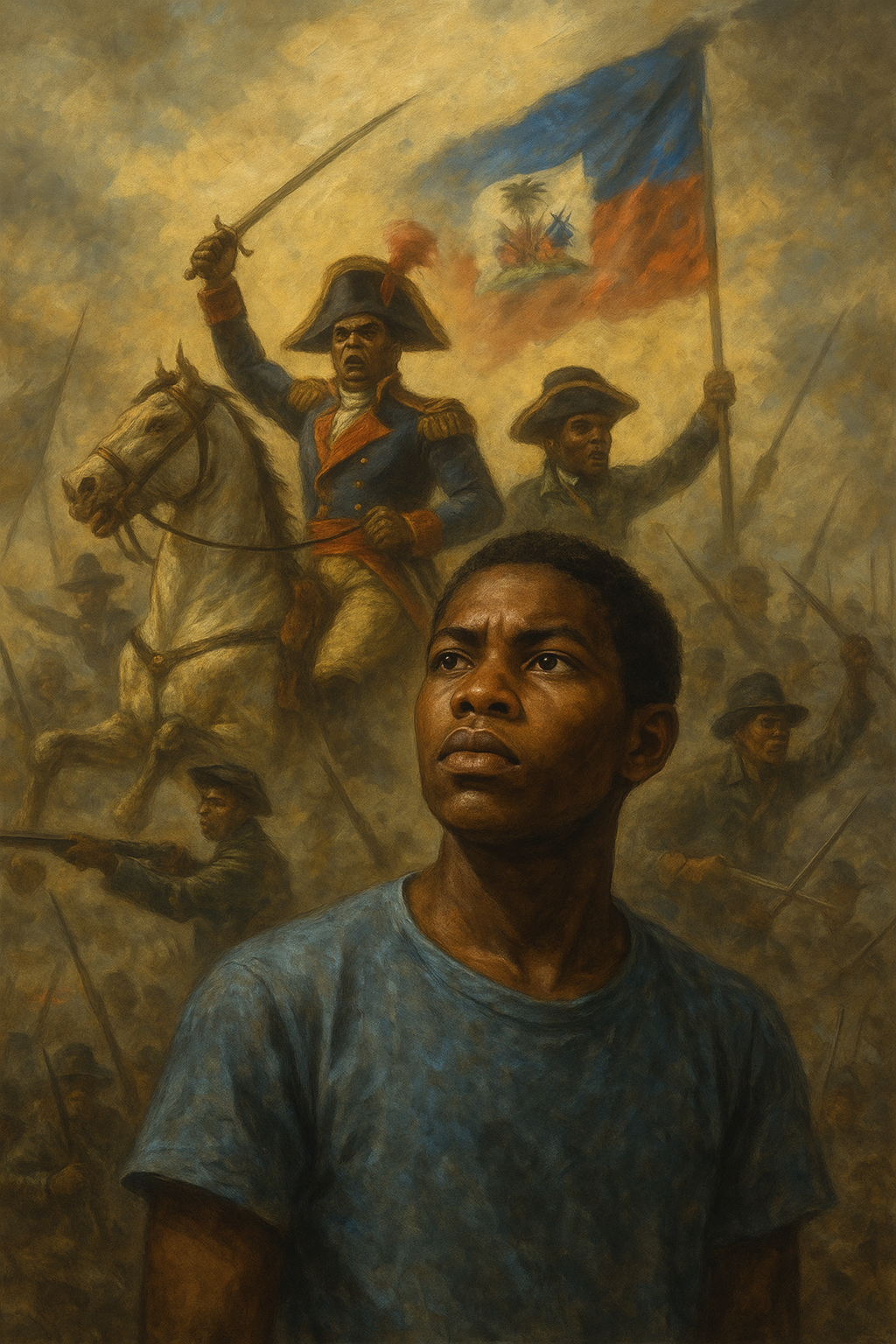
| “Pa lage… An avan! The whispers of Vertières still guide Haiti’s youth.” |
November 18 marks the anniversary of the Battle of Vertières—the last thunderous clash that sealed Haiti’s destiny and gave birth to the world’s first Black republic. On that morning in 1803, under torrential rain and a sky cracked by cannon fire, Jean-Jacques Dessalines and his fearless generals drove the French imperial army to its knees. Haiti rose from the ashes of bondage, standing tall before a world that doubted its right to exist. Vertières was not simply a military victory; it was the declaration of a people who had decided that dignity was non-negotiable.
This anniversary does not arrive in ordinary times. Haiti stands today at the edge of an abyss—its institutions weakened, its people suffocating under violence, poverty, and uncertainty. Entire neighborhoods have been displaced by armed groups. Schools are shut or disrupted. Families live day to day, unsure of where safety begins or ends. To the outside world, Haiti has become a headline of tragedy. To Haitians themselves, it has become a test of endurance unlike any faced since independence.
And yet, when November 18 returns each year, something extraordinary happens. In the sorrow, in the hardship, in the collective fatigue, one feels the tremor of memory—the whisper of Vertières.
For many Haitians, especially the youth, Dessalines has never been so missed. Not because they long for a warrior drenched in blood, but because they long for clarity, moral courage, and the fierce love of country that animated him. They see in Dessalines a leader who refused to bow to foreign domination, who protected the most vulnerable, and who believed Haiti’s freedom must be uncompromising. In their darkest nights, some imagine what he would say now, what Capois-La-Mort would shout were he galloping again through the smoke, what Gabart, Gérin, Pétion, or Clervaux would demand of a nation trembling between collapse and rebirth.
The youth of Haiti—scattered across Port-au-Prince, Cap-Haïtien, Jérémie, Gonaïves, the diaspora—are not blind to the devastation around them. But they are also the heirs of 1803, and whether they speak it aloud or not, they carry the memory of resistance deep in their bones. They know their ancestors defeated the world’s most powerful armies, not through luck, but through vision, unity, and a refusal to surrender their humanity.
In whispered conversations, in underground classrooms, in community groups, in the small acts of courage Haitians perform each day—sharing food, protecting neighbors, rebuilding what is destroyed—there is an echo of Vertières. It is quiet, but it is real.
Many young Haitians say they feel as if Dessalines himself still walks the land, invisible yet present, urging them forward: Pa lage. Do not give up. Capois’ legendary cry—“An avan!”—still rises like a drumbeat in moments of despair. Those voices are not ghosts; they are reminders that Haiti was forged in impossible circumstances. If the enslaved could imagine a republic while chained, today’s generation can imagine a future while surrounded by turmoil.
The lesson of Vertières is not that victory is inevitable. It is that liberation requires sacrifice, clarity of purpose, and a collective decision to stand. The situation Haiti faces today demands more than nostalgia—it demands leadership rooted in principle, a civic rebirth, and a commitment to national dignity. No foreign solution can substitute for the will of a people determined to reclaim their destiny.
Haiti’s youth understand this. Despite the crushing weight of the present, they continue to dream, to fight for education, to create, to organize, to hope. They are the living answer to those who say Haiti is finished. Like the soldiers of 1803, they advance with courage even when the path is obscured.
As the nation commemorates another anniversary of Vertières, let the memory not be reduced to ceremony. Let it be a compass. A reminder that darkness is not new to Haiti—and neither is the light that emerges from its people. Vertières teaches that despair is never final. Haiti has fallen before, but it has always risen.
Today, in the quiet determination of its youth, Haiti rises still.
 Note: Ardain Isma is a university professor, novelist, essayist, and scholar. He serves as Chief Editor of CSMS Magazine and leads Village Care Publishing, an indie press dedicated to multicultural and social-justice-oriented literature. His works include Midnight at Noon, Bittersweet Memories of Last Spring, Last Spring was Bittersweet and The Cry of a Lone Bird – his latest novel which explores resilience, love, and the enduring quest for human dignity.