

Christine Jean-Pierre
CSMS Magazine
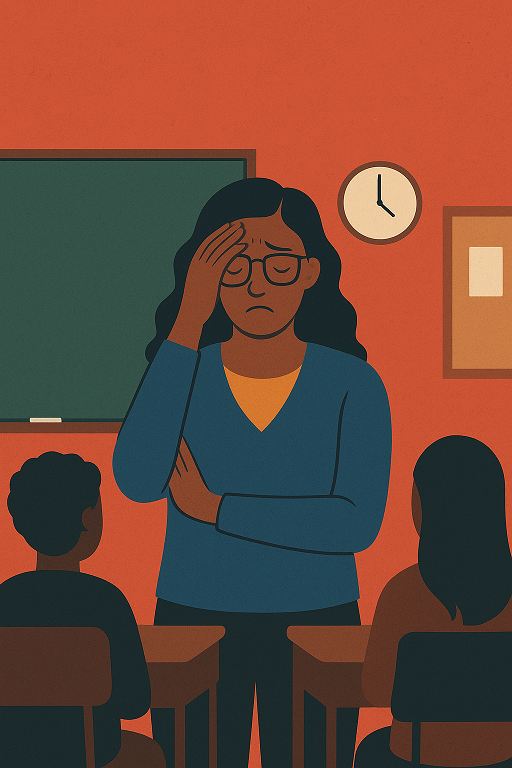
Across the country, classrooms are filled with passion, dedication, and—too often—exhaustion. Teachers, once celebrated as community pillars, now find themselves on the frontline of social, emotional, and economic battles that extend far beyond lesson plans. The pandemic may have amplified the crisis, but burnout among educators has been building for years. Today, more teachers are not only confronting this reality but also leading efforts to change the culture of education itself.
Burnout among teachers isn’t simply about long hours. It’s about emotional fatigue, bureaucratic overload, and a widening gap between expectations and support. A 2024 National Education Association report revealed that nearly 55% of teachers considered leaving the profession early due to stress. Many describe juggling overcrowded classrooms, outdated materials, and increasing administrative demands—all while trying to meet the growing emotional needs of their students.
“It’s not that we don’t love teaching,” says Maria Gonzalez, a veteran middle school teacher in Florida. “It’s that we’re being asked to do everything—counselor, nurse, social worker—without the resources or respect that those roles require.”
Educators like Gonzalez represent a growing movement of teachers who are turning frustration into advocacy. Instead of walking away, they’re speaking up—through unions, community groups, and online platforms—to demand systemic change. Their message is clear: fixing burnout means fixing the conditions that create it.
One of the most significant changes teachers are pushing for is mental health support—for both students and staff. Many school districts now employ wellness coordinators or provide mental health days, though access remains uneven. Teachers are also forming peer support circles, both in person and online, to share coping strategies and vent without judgment.
At the same time, policy advocacy is gaining ground. Educators are lobbying for smaller class sizes, higher pay, and more equitable funding. States like California and Massachusetts have introduced legislation to reduce non-instructional burdens, such as excessive paperwork and redundant testing requirements.
These steps might seem small, but they signal a shift toward valuing the holistic well-being of teachers—not just their productivity.
Technology, too, is playing a double-edged role. While digital tools have expanded access to learning, they’ve also blurred work-life boundaries. Emails, grading apps, and online parent communications often extend a teacher’s workday late into the night. Recognizing this, some schools are implementing “digital curfews”—encouraging teachers to disconnect after hours. It’s part of a broader cultural effort to restore balance.
But perhaps the most powerful force for change is coming from within the teaching community itself. Younger educators, often more outspoken about self-care and systemic inequities, are redefining what it means to be a teacher-activist. They’re challenging the long-held notion that burnout is just “part of the job.”
“We’re done glorifying exhaustion,” says Anthony Reed, a high school English teacher and education podcaster. “Teaching shouldn’t require martyrdom. If we want passionate educators to stay, we have to make the profession sustainable.”
The push for sustainability is gaining traction in teacher training programs, too. Universities are embedding courses on emotional resilience, boundary-setting, and collective action into their curricula. The hope is to equip new teachers not only with pedagogy but with the tools to thrive amid challenges.
Still, there’s a long road ahead. Education reform is notoriously slow, and burnout doesn’t vanish overnight. But every initiative—every teacher who chooses to speak up rather than burn out—adds momentum to a growing movement.
Teachers are, and have always been, the heart of education. But now, they’re also its most urgent advocates. On the frontline of change, they’re proving that resilience isn’t just about enduring hardship—it’s about transforming it.
Also see: Back-to-School Readiness – Confidence for a New Year