

Ardain Isma
CSMS Magazine
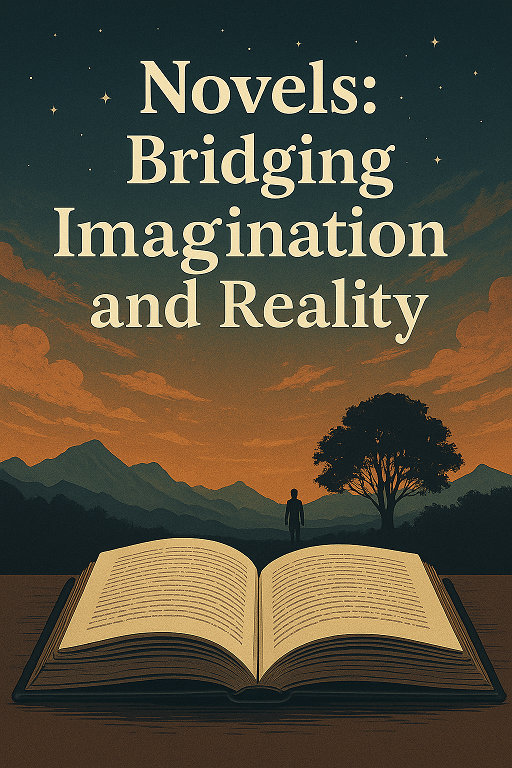
In every society, stories have been the heartbeat of human experience. Long before the printing press or digital screens, people gathered around fires to share tales that blurred the line between the imaginary and the real. Today, novels continue that timeless tradition, serving as powerful bridges that connect our deepest imaginings to the lived realities of the world.
A novel is, by its nature, an act of imaginative creation. Authors build entire worlds—sometimes fantastical, sometimes familiar—populated with characters who spring from the mind’s eye. Yet, what gives novels their enduring power is not simply their inventiveness, but their ability to root these imagined worlds in human truth. Whether the setting is a distant galaxy, a Haitian village in 1948, or a bustling modern metropolis, the emotional and moral questions novels explore are profoundly real.
Fiction gives us space to grapple with reality from a safe distance. Through storytelling, readers can confront uncomfortable truths, explore alternate perspectives, or walk paths their real lives may never allow. A well-crafted novel becomes a mirror that reflects society’s complexities, and at the same time, a window that opens onto new possibilities.
Moreover, novels shape collective memory and cultural identity. Historical fiction, for instance, allows readers to revisit pivotal moments through the lens of personal stories, transforming abstract events into lived experiences. Social novels challenge power structures and reveal hidden injustices, sparking dialogue and sometimes inspiring real-world change. Even works of pure fantasy carry echoes of the societies from which they emerge, weaving moral, cultural, and political threads into imaginative tapestries.
Readers, too, play an essential role in this bridging process. Each person brings their own experiences, values, and emotions to the act of reading, completing the circuit between imagination and reality. A story lives fully only when it finds a home in the reader’s mind and heart, where it can inspire reflection, empathy, or action.
In a world often fragmented by rapid change and information overload, novels remain one of our most profound tools for understanding ourselves and each other. They remind us that imagination is not an escape from reality but a vital part of how we make sense of it. Through novels, the imaginary and the real do not stand apart—they meet, intertwine, and shape the way we see the world.
Also, see: Comfort Over Courage: The Indie Writer’s Flaw
 Note: Ardain Isma is the Chief-Editor of CSMS Magazine. He is the author of several books, including Midnight at Noon, Bittersweet Memories of Last Spring, Last Spring was Bittersweet and The Cry of a Lone Bird You can order these books by clicking on the links above.